
-
Products
- Comprehensive Health Insurance
- My Family Complete
- My Health Companion
- My Swasthya Care
- Individual Health Insurance
- Family Health Insurance
- My Health Care Plan
- Health Guard
- Global Health Care - International Health Insurance
- Silver Health for Senior Citizens
- Arogya Sanjeevani Policy
- Non Medical Expense Rider
- Health Prime Rider
- Respect Rider
- Aapke Liye
- MHCP EDGE+
-
Renew
-
Claim
-
Support
-
Become an Agent
Zero GST on Health Insurance: Accelerating India’s Health for All Mission
CEO Blog
26 Feb 2026

Dr. Tapan Singhel - MD & CEO

310 Viewed
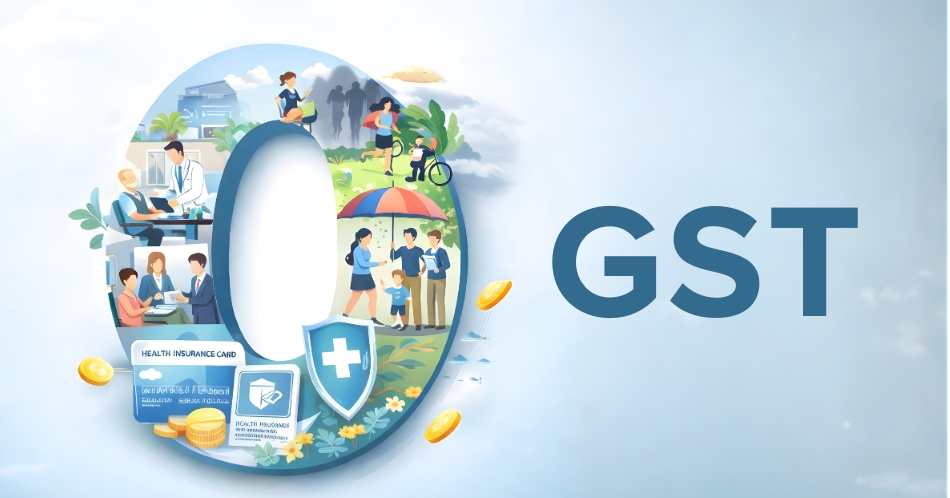
India's insurance sector is reaching a significant turning point in 2026. Eliminating GST on individual health insurance has confronted one of the longest-standing obstacles to its adoption and affordability. For years, we have discussed the importance of expanding the range of protection. Now, with this reform implemented, we are finally witnessing the ecosystem progress in the correct direction, but with increased speed and confidence.
The implementation of zero GST reforms has led to significant savings and growth, perfectly matching my ongoing efforts to promote affordable "Health for All." When protection becomes more cost-effective, intentions turn into actual steps. Families who were once reluctant are now coming forward, and youngsters are starting to view health insurance as a necessity instead of an optional expense.
At forums like the World Economic Forum, I have repeatedly highlighted that the next major increase in insurance coverage in India will result from the combined efforts of affordability, availability, and trust. The zero-GST decision represents a significant structural move toward that goal. Crucially, the initial trends noticed in 2026 suggest that the reform is already having a positive effect on purchasing behavior.
What This Means for the Consumer
The most immediate advantage can be seen in household finances. Without the tax portion, families are seeing considerable decreases in premiums, making extensive health coverage much more accessible.
These savings are especially significant for first-time purchasers in the 20–40 age range, where affordability has traditionally been the largest barrier to entry, and for senior citizens who are dealing with high medical inflation. In 2026, we are encouragingly witnessing higher levels of inquiry and greater desire to convert across all of these sectors.
Policy Type | Pre-Reform (with GST) | Post-Reform | Approx. Annual Savings |
₹50,000 family floater | Included 18% GST | GST removed | ~₹9,000 saved |
₹1 lakh family floater | Included 18% GST | GST removed | ~₹18,000 saved |
However, consistent implementation across the value chain is necessary for further progress. Fair healthcare pricing, easy service, and transparent claims procedures must all support affordability. Enhancing the claims procedure, expanding digital capabilities, and strengthening client confidence are our top priorities at Bajaj General Insurance, formerly known as Bajaj Allianz General Insurance, as long-term market presence depends on consistent performance rather than just low pricing.
Implications for MSMEs and Employers
The MSME ecosystem benefits from the reform's secondary effects as well. The current GST framework still governs group health policies, but overall tax system simplification is improving regulatory efficiency and giving small firms greater operational freedom. This is especially crucial in 2026 since small and medium-sized businesses are looking for additional strategies to optimize benefits while maintaining financial control.
Area | What Changed | Post-Reform |
GST framework | Movement toward simplified slabs | Lower compliance complexity |
Dispute levels | Reduced classification ambiguity | ~30–40% fewer disputes |
Group health taxation | Continues at 18% | Encourages hybrid coverage models |
MSME cash flow | Improved planning flexibility | Benefits 50M+ small firms |
We believe that the hybrid protection strategy will gain a lot of traction in the future. Employers provide a minimum amount of health coverage under this approach, and people can increase their protection by buying additional coverage through retail choices. This creates an extensive and dynamic safety net that helps the public and companies alike.
Without significantly increasing fixed insurance costs, this model enables firms to provide flexible employee benefits and better cost control. It brings up a crucial point for people and families, in today's more expensive healthcare environment, relying solely on employer-provided insurance may not be sufficient. Even when taking professional pauses, changing jobs, or going self-employed, an additional personal policy helps ensure ongoing coverage.
Momentum in the Industry in 2026
The way industries are expanding is a strong indication of the improvements that have been implemented. Better affordability, higher consumer awareness of potential risks, and growing retail demand have made health insurance the main source of growth in the non-life market in 2026.
As per the latest data from the Insurance Regulatory and Development Authority of India (IRDAI) FY25 handbook Annual Report, overall insurance penetration in India stands at 3.7% of GDP, with General Insurance penetration at 1% of GDP. We have seen an increment of 6.15% in GDPI from FY24 to FY25.
This phase is important not because of the rate of growth but because of the type of growth. We are witnessing a continuous rise in the number of first-time purchasers joining the market, more young consumers purchasing health insurance, and current policyholders upgrading to better coverage. A definite long-term shift toward specialized health coverage in India can be seen in the standalone health insurers' ongoing superior performance.
Simultaneously, the disparity between urban and rural coverage indicates the next growth frontier. Rural India still has a lot of untapped potential, even though urban markets are steadily growing. Converting this opportunity into meaningful coverage will require simpler products, greater agent reach, and stronger digital distribution.
It is clear that the trend is favorable. However, in 2026, the industry's focus should be on execution, ensuring that growth is supported by strong underwriting practices, efficient claims processing, and sustained customer confidence. Ultimately, this will determine whether the current momentum translates into inclusive, long-term protection for India.
Expert Opinion: What Needs to Happen Next
In order to fully attain the benefits of the zero-GST reform, a strict and well-coordinated approach across industries will be necessary:
- Sustain the Affordability Momentum
nsurance companies need to make sure that the advantage of tax elimination continues to clearly reach their customers. Pricing uniformity and product innovation will be essential in maintaining trust.
- Streamline the Claims Process
Establishing confidence will be greatly aided by faster and more reliable claim resolutions. Real-time hospital integrations and AI-driven claims processing should be implemented more quickly by the industry.
- Expand Rural Outreach
Even though urban regions are continuously improving, Bharat still does not have enough coverage. It will be crucial to increase the agents' reach, take advantage of digital platforms like Bima Sugam, and simplify the policies for new customers.
- Promote responsible healthcare costs.
The affordability of insurance should be backed by reasonable hospital pricing structures for long-term viability. Everyone involved benefits from a well-balanced ecology.
- Develop hybrid protection models.
With the goal to create multi-tiered protection frameworks that successfully combine group and individual insurance coverage, employers, small and medium-sized businesses, and insurance providers should collaborate.
The Way Forward: Turning Reform into Lasting Protection
When considering the Indian insurance market from the perspective of 2026, the zero-GST reform is undoubtedly a strategically beneficial step. It has strengthened the route to more comprehensive protection coverage, raised affordability, and stimulated demand.
However, policy momentum must now translate into real on-ground impact. Disciplined execution is the next critical phase, encompassing simpler products, faster claims, wider rural reach, and sustained customer trust. India is well positioned to move closer to the national vision of Insurance for All by 2047, provided insurers, healthcare providers, regulators, and distribution partners remain aligned in both intent and execution.
The direction is right. The progress is visible. The focus now must remain on ensuring consistent and effective distribution.
For millions of Indian families, health insurance transforms from a financial commodity into an authentic safety net when affordability, trust, and awareness are combined. And that is the future we must continue to build, together.
Dr. Tapan Singhel - MD & CEO
This blog has been initiated by him so that he can directly interact with all the valuable customers and employees of this company.

Explore More Articles

With GST waiver, individual and family floater policies for health, personal accident, and travel insurance (on retail basis) are 18% cheaper from 22 September 2025. Secure what matters at an affordable price!
